
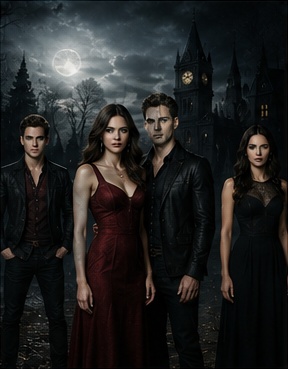

The Vampire Diaries built its supernatural world around blood, danger, family loyalty, and death, but romance was the engine that kept much of the emotional drama moving. The show’s most memorable intimate moments were rarely memorable because they were explicit. They worked because viewers had watched attraction build through conflict, jealousy, sacrifice, and impossible choices. A look across a ballroom could carry more weight than an entire love scene.
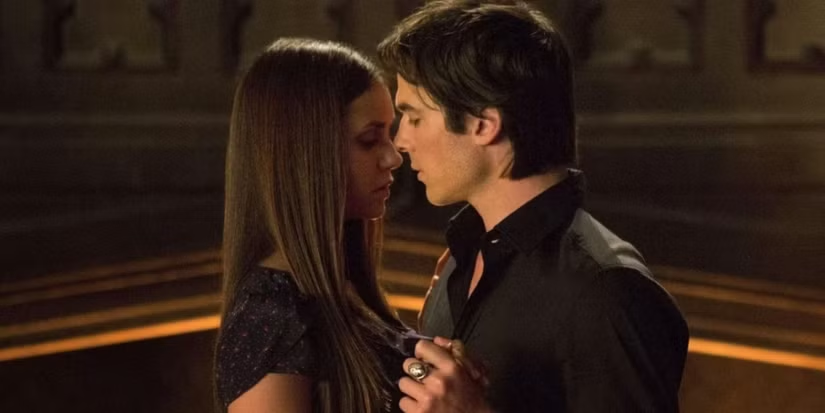
Here are nine romantic moments that fans still return to when discussing the chemistry of Mystic Falls.
1. Damon and Elena at the Miss Mystic Falls dance
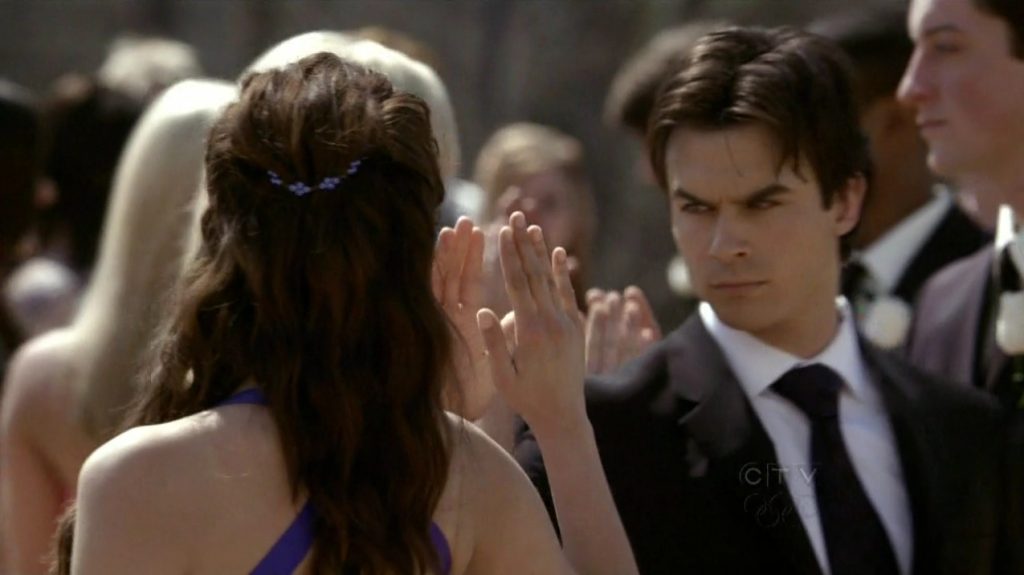
In Season 1, Damon steps in when Stefan cannot complete the formal dance with Elena. The scene is controlled and elegant, but the tension is obvious. Nothing major “happens,” which is exactly why it works. The choreography turns a public event into a private shift in their relationship.
2. Stefan and Elena in “The Turning Point.” Early in the series, Elena’s decision to return to Stefan after confronting the reality of what he is becomes a defining moment for their relationship
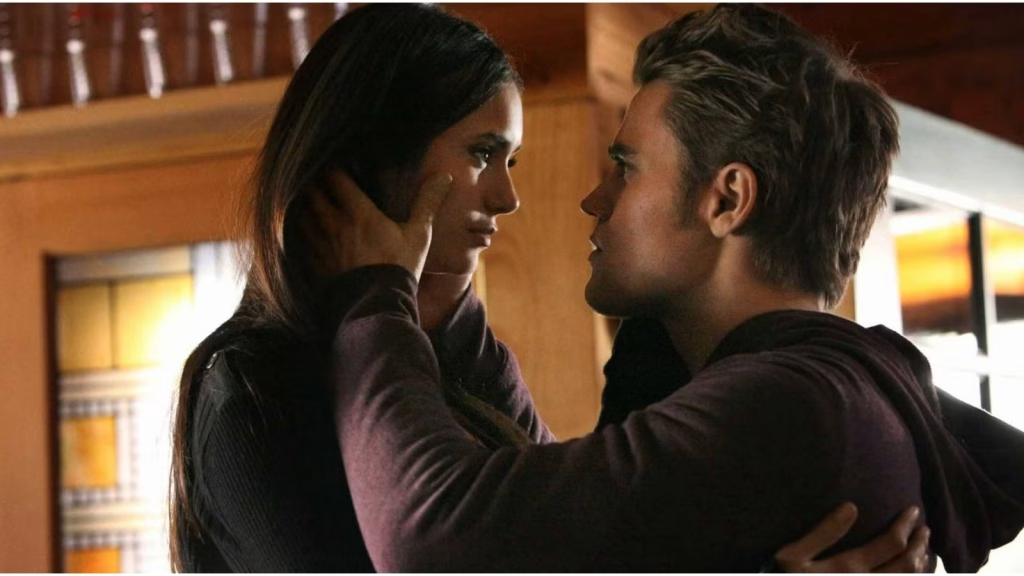
The scene combines fear and commitment: she understands that being with him carries danger, yet chooses emotional honesty anyway. It established why the Stefan-Elena romance mattered so much in the show’s first era.
3. Damon’s compelled confession
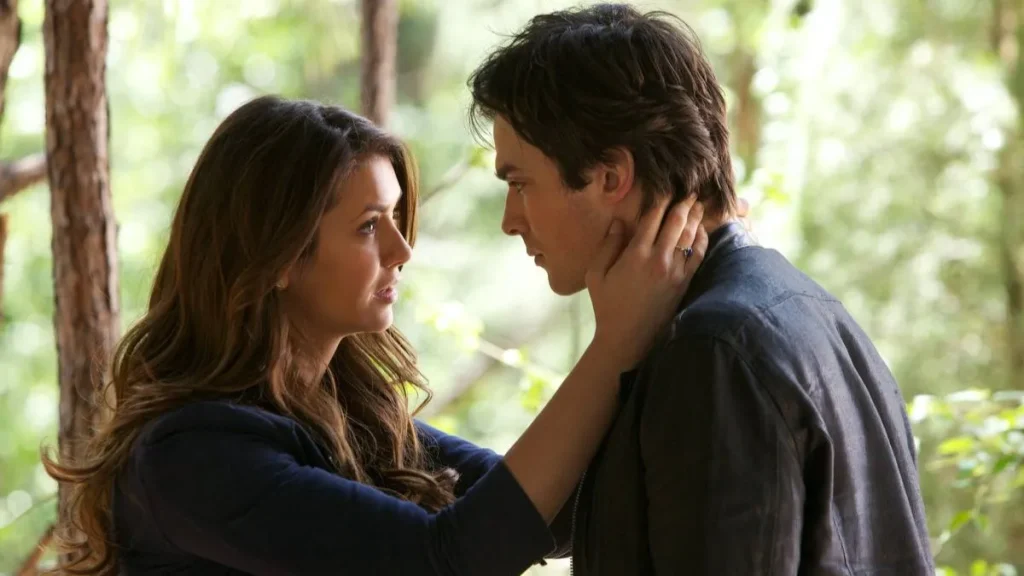
Damon tells Elena that he loves her and then compels her to forget the conversation. The moment is romantic and troubling at the same time, which is very much the show’s signature. His choice is framed as self-denial, but the use of compulsion also underlines how supernatural power complicates consent throughout the series.
4. The Mikaelson ball
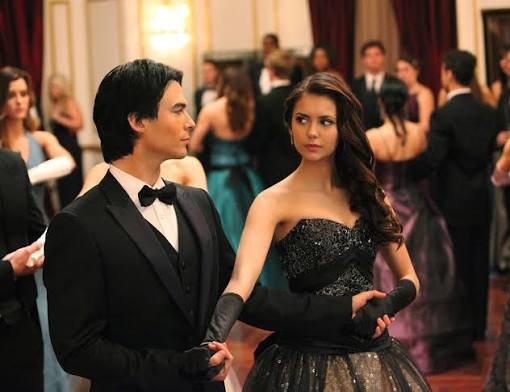
Formalwear, candlelight, music, danger, and unresolved feelings: the series knew exactly how to build romantic spectacle. Damon and Elena’s interactions at the Mikaelson event carry the energy of two people who are trying to behave normally while every glance suggests the opposite. The setting amplifies everything without requiring much dialogue.
5. The motel kiss
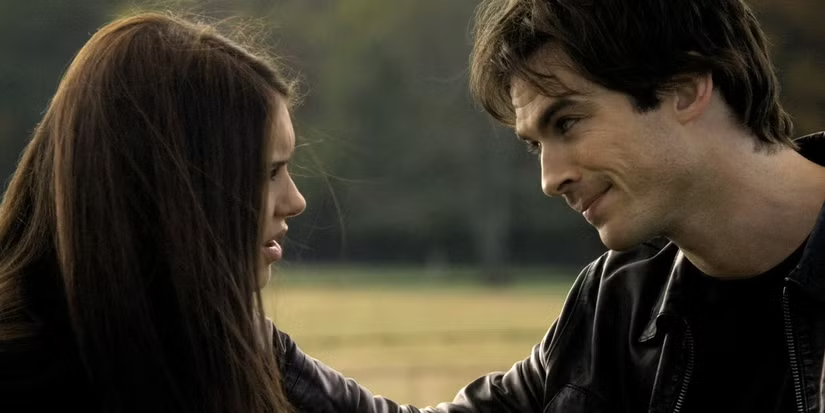
The Damon-Elena road-trip storyline in “Heart of Darkness” pushes their long-running attraction into a more direct moment. Fans remember the kiss because it arrives after seasons of emotional friction. The scene is less interesting as a standalone kiss than as the point where denial becomes difficult to maintain.
6. Klaus and Caroline finally stop pretending there is no chemistry
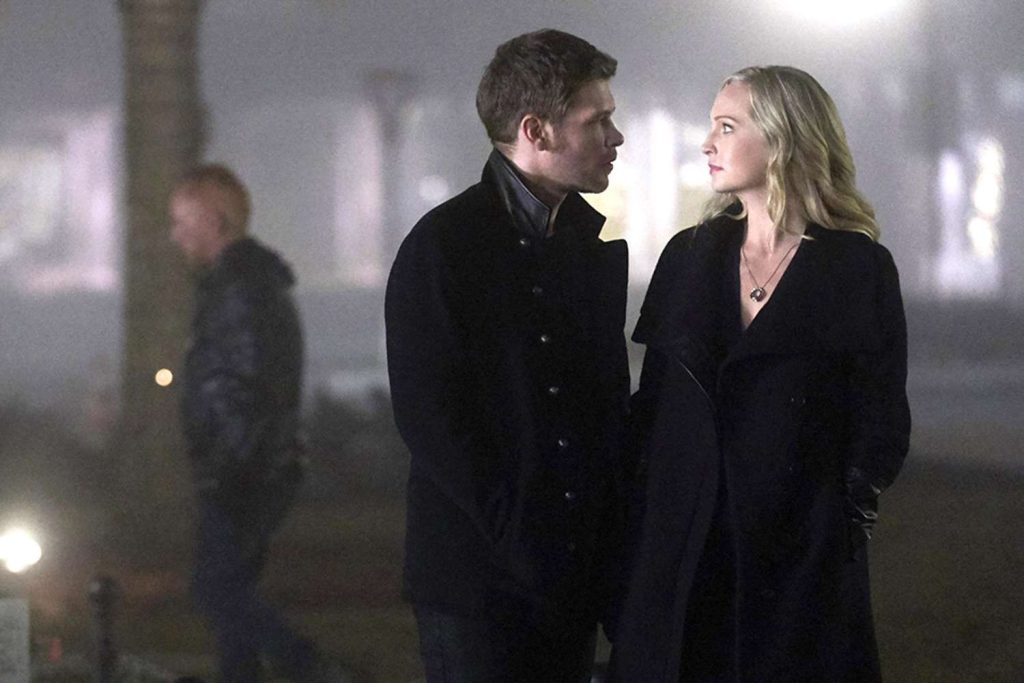
Klaus and Caroline became one of the show’s most unexpected pairings. Their dynamic mixed flirtation, danger, resistance, and the idea that Klaus saw a larger future for Caroline than the one she imagined for herself. When the tension finally turns physical, the payoff works because the show had spent so long keeping them apart.
7. Tyler and Caroline after the transformation
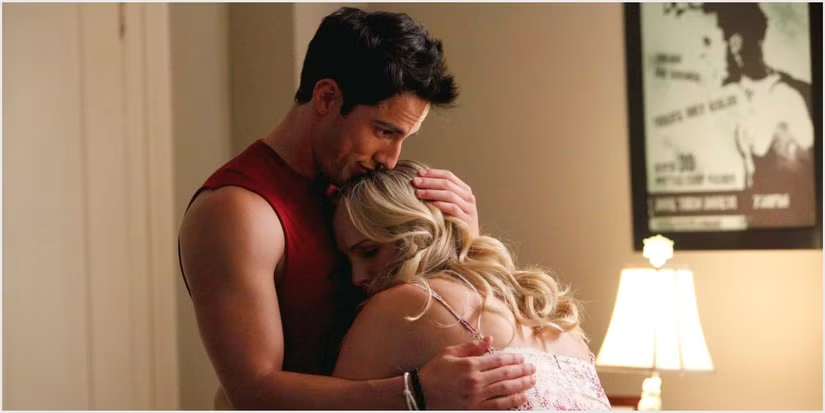
The series often made romance more effective by putting it beside pain. Caroline supporting Tyler through the horror of his werewolf transformation gave their relationship emotional credibility. The closeness afterward is memorable because it comes after vulnerability, fear, and trust rather than a glamorous setup.
8. Bonnie and Enzo’s slow-burn intimacy
[IMAGE 9 — moody romantic scene, dramatic cinematic lighting]
Bonnie spent much of the series sacrificing for other people, so her relationship with Enzo felt different when he began consistently choosing her. Their later scenes, including quiet dancing and private conversations, gave Bonnie a kind of romance that was less about being trapped in a triangle and more about being seen and prioritized.
9. Stefan and Caroline’s shift from friendship to love
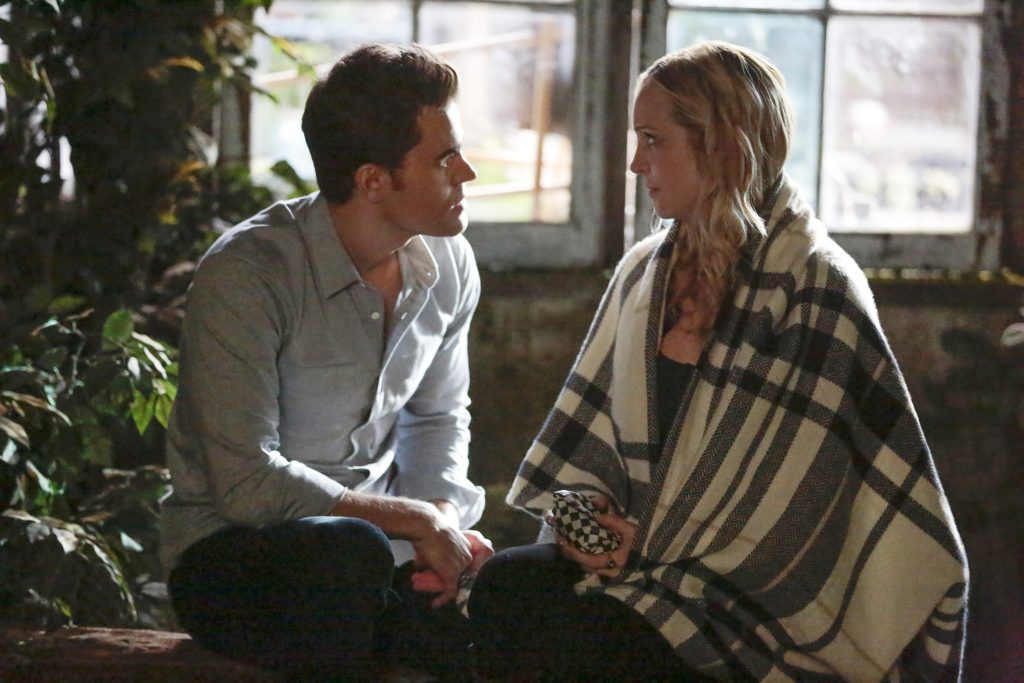
Their relationship did not begin with instant passion. It grew through years of friendship, mutual support, and emotional familiarity. That made their later romantic scenes appealing to viewers who preferred a relationship built through trust rather than obsession. The chemistry came from the history already sitting underneath it.
Part of the reason these scenes remain popular is that The Vampire Diaries understood anticipation. Romantic tension needs delay. If two characters immediately act on every feeling, the audience has little time to imagine what might happen. The series repeatedly stretched attraction across episodes and seasons, letting tiny gestures accumulate meaning.
The show also used setting exceptionally well. Mystic Falls dances, old mansions, road trips, candlelit rooms, and supernatural danger created environments where ordinary romantic actions felt heightened. A hand offered during a dance could become a major relationship beat because the viewer already knew how much history was packed into the gesture.
It is worth remembering that the series began with many of its central characters written as teenagers, even though the performers were adults. For that reason, the most interesting way to revisit the show’s “steamy” reputation is through chemistry, narrative tension, and romance rather than explicit sexual detail. What fans usually remember anyway is not anatomy. It is anticipation: the look before the kiss, the confession that comes too late, the dance that reveals too much, or the moment one character finally chooses another.
That formula helped The Vampire Diaries outlive its original broadcast era. Years after the finale, viewers still debate Stefan versus Damon, rank the best couples, and rewatch the same ballroom and motel scenes. The supernatural plot supplied the danger, but the romantic uncertainty supplied the replay value.
Music is another reason these scenes linger. The series frequently paired emotional turning points with songs that fans later associated permanently with specific couples. A scene viewed without context may seem simple; add several seasons of history and a carefully chosen track, and it becomes a memory trigger. That combination of soundtrack, lighting, costume, and delayed payoff is why TVD romance often feels larger in recollection than the literal action on screen.