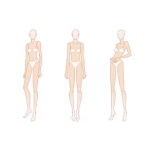
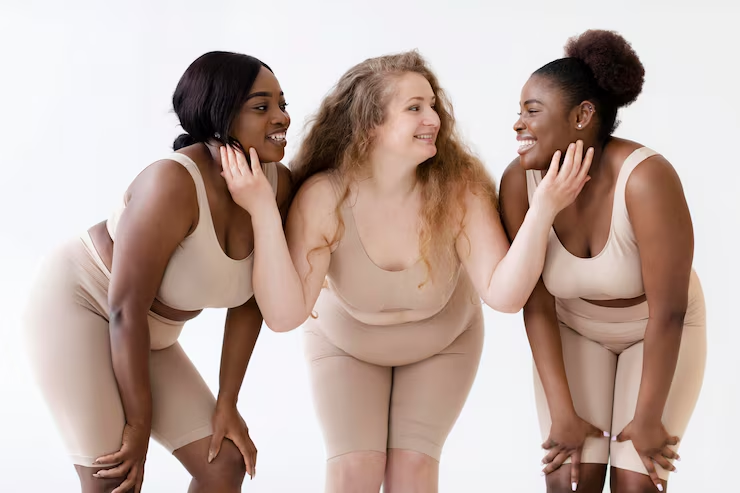

For years, beauty culture has had a strange habit of turning ordinary anatomy into a “problem” that supposedly needs to be corrected. Hip dips are a perfect example. The term describes the inward curve that can appear between the hip bone and the upper thigh. Some people have a noticeable indentation, some have only a slight one, and some barely have one at all. The shape is largely influenced by skeletal structure, muscle distribution, and where the body naturally stores fat.
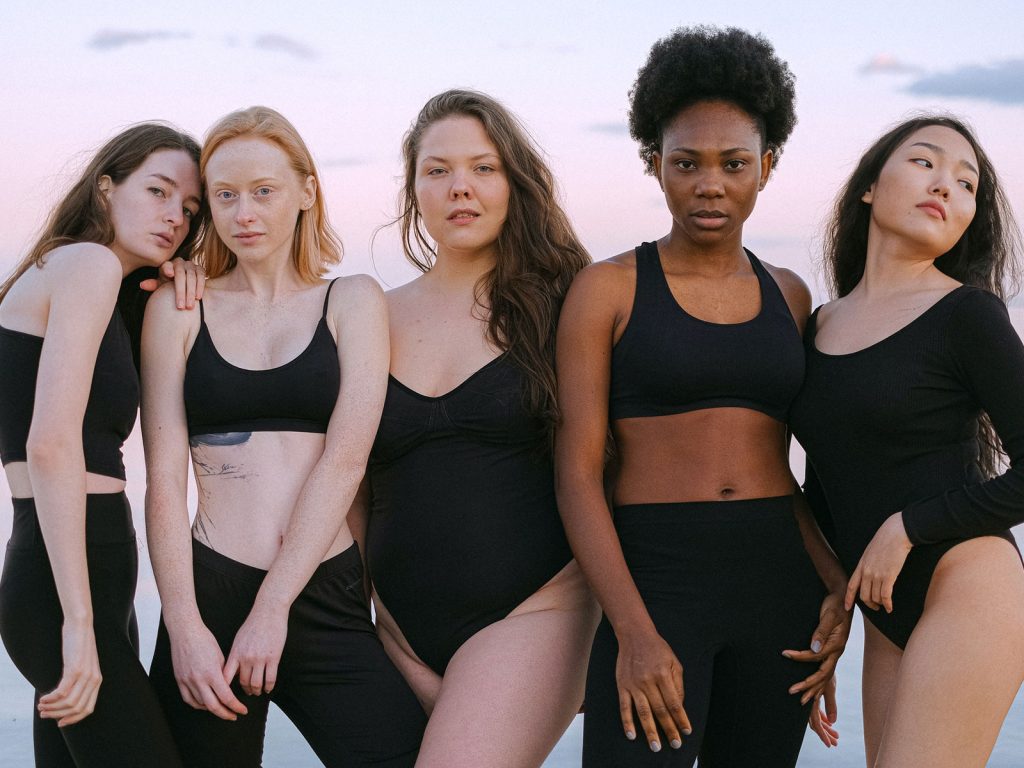
In other words, hip dips are not a defect. They are simply one possible contour of the human body. Yet social media filters, carefully chosen poses, shapewear, and retouching made smooth hourglass silhouettes seem more universal than they really are. Body-positive conversations have pushed back against that idea, and a number of famous women have helped by appearing in swimsuits, fitted dresses, workout clothes, and casual photos without trying to hide every natural curve.
It is important not to turn that into a new form of body inspection. The point is not to study celebrities and decide who has “good” or “bad” hip dips. The useful part is seeing a wider range of real silhouettes represented in public.
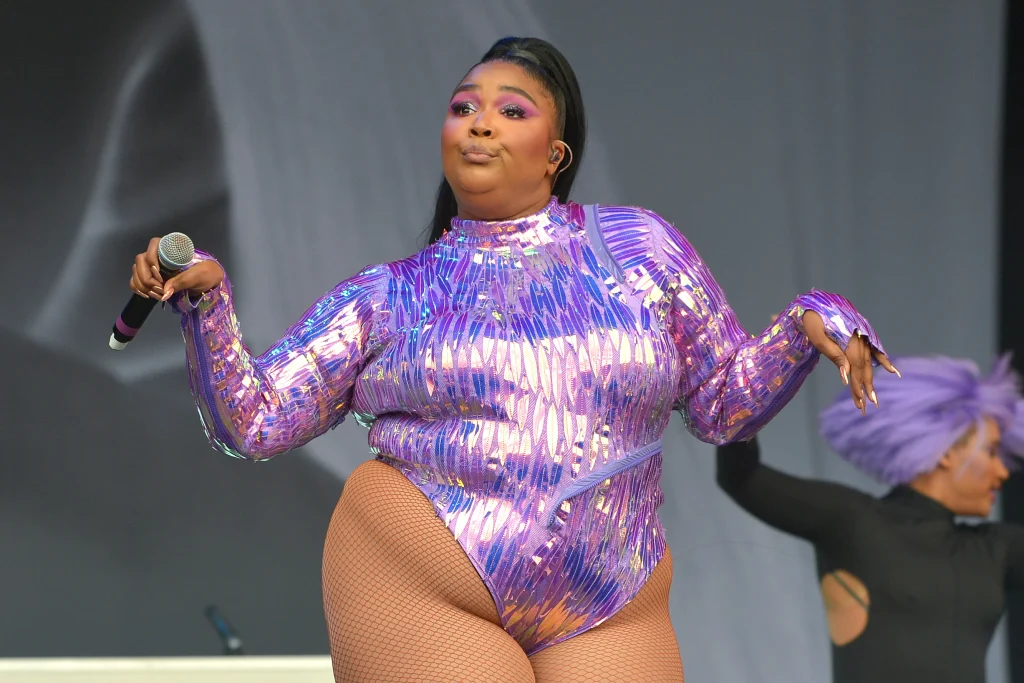
Lizzo has been one of the loudest advocates for body autonomy in modern pop culture. Her performances and social posts regularly show her in bodysuits, swimwear, and close-fitting stage costumes without treating visible folds, curves, or indentations as something that requires apology. Her broader message has been consistent: a body does not need to earn the right to be seen by first conforming to a narrow template.
Ashley Graham has played a similar role in fashion. As a model, she works in an industry built around close visual scrutiny, yet she has repeatedly discussed cellulite, curves, and the gap between real bodies and retouched imagery. Photos of Graham in swimwear or lingerie often resonate because they show how a professionally styled body can still have perfectly normal texture and contour.
Demi Lovato has also spoken publicly about body image and the pressure to control appearance. Over the years, Lovato has shared less-retouched images and talked about learning to live with a body rather than constantly fighting it. That context matters more than whether one specific photo shows a pronounced hip dip. The message is that ordinary variation does not have to be edited away.
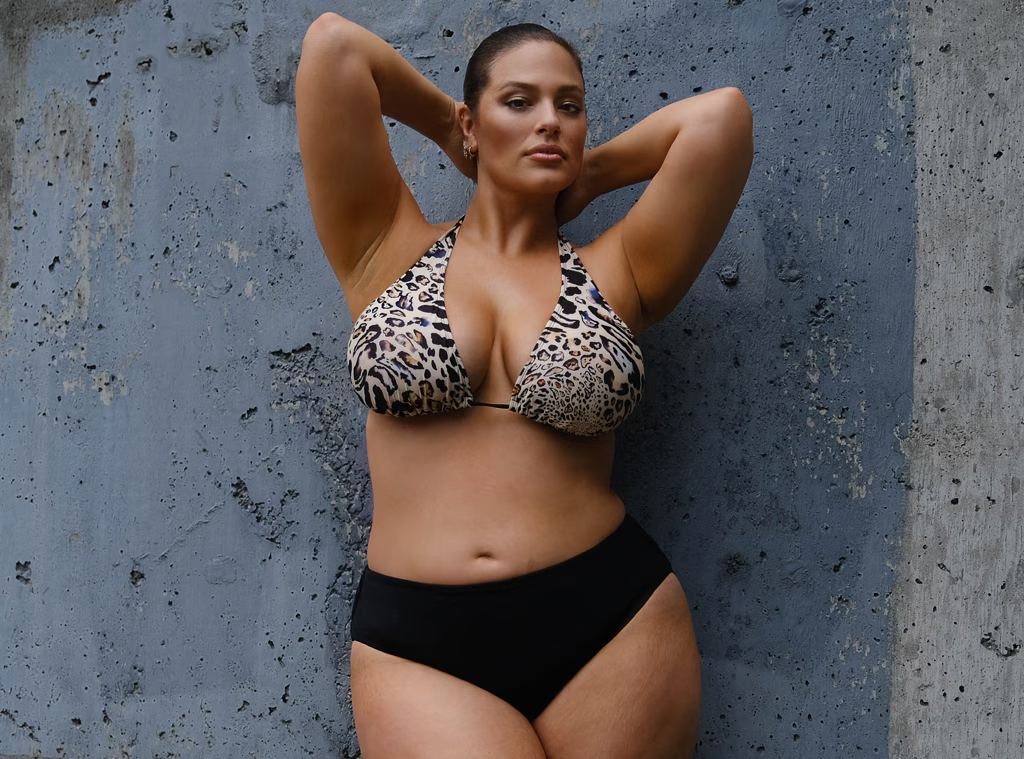
Selena Gomez has increasingly embraced a less defensive relationship with public images of her body. She has spoken about changes in her appearance and has appeared in swimwear and fitted looks without trying to present a permanently frozen version of herself. For many fans, that visibility is reassuring because it challenges the idea that celebrities must maintain one exact silhouette throughout adulthood.
Iskra Lawrence, a model and longtime body-confidence advocate, has perhaps been the most direct about the tricks that can change how a body appears online. She has demonstrated how posing, lighting, posture, and camera angle can make the same body look dramatically different within seconds. That is especially relevant to hip dips because a slight rotation of the pelvis or shift of weight can make the indentation appear stronger or disappear almost completely.
These examples matter because social media trains people to compare a moving, three-dimensional body with a carefully selected two-dimensional image. In real life, hips change shape when you walk, sit, twist, flex, or relax. A still photo captures only one fraction of that movement. When thousands of selected images show the same smooth outline, viewers can start to believe that anything else is unusual.
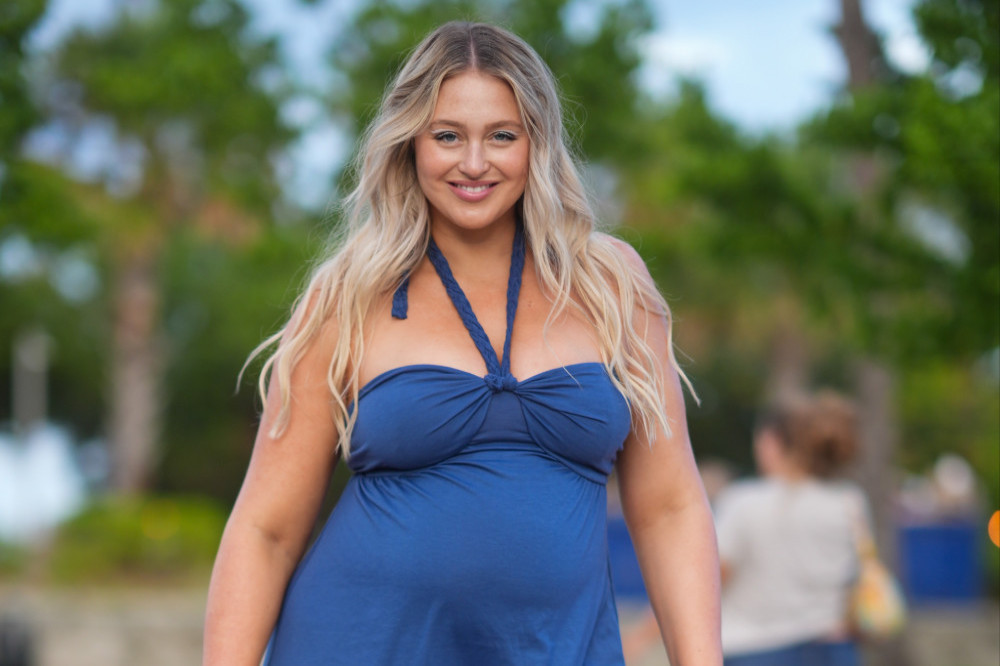
Exercise can change the muscles around the hips and thighs, and changes in body fat can alter the overall silhouette, but no workout can redesign the underlying shape of the pelvis. That is why promises to “eliminate hip dips” should be viewed skeptically. Strength training may make you stronger and can change muscle size. It cannot guarantee a specific bone-dependent contour.
Clothing can also influence appearance if you want that option. High-waisted trousers, structured fabrics, A-line skirts, and different underwear cuts can visually smooth the hip line. There is nothing wrong with styling a body in a way you enjoy. The key distinction is choice. Dressing to create a certain silhouette is very different from believing your natural silhouette is unacceptable.
The body-positive value of celebrity visibility is strongest when it expands the range of what looks normal. A famous person does not need to become a symbol for a particular body feature, and viewers do not need to copy their confidence perfectly. It is enough to recognize that the bodies we see in magazines, on red carpets, and online are not all built from the same template.
Hip dips may continue to trend under different names, but the anatomy is not new. What is changing is the willingness to show it. That shift is useful because the healthiest response to a normal body variation is not endless correction. It is perspective: some people have hip dips, some do not, and neither version says anything meaningful about beauty, fitness, femininity, or worth.
The same principle applies to photographs of famous women. A single image should not become evidence that someone has embraced or rejected a body feature; celebrities pose, move, gain and lose weight, and choose different styling like everyone else. The broader value comes from volume: the more unretouched-looking bodies appear in mainstream fashion and entertainment, the harder it becomes to believe that one digitally smoothed silhouette is the only normal one. Representation works best when no one body has to carry the entire message.