


Growing up in public means that even ordinary clothes can become part of a larger story. For Suri Noelle, the daughter of Katie Holmes and Tom Cruise, that story has unfolded gradually rather than through a sudden celebrity makeover. Her style has moved from the polished outfits of a famous child in New York to the relaxed, personal wardrobe of a young adult building a life of her own. What makes the transformation interesting is not that every look is dramatic. It is that the clothes increasingly look chosen for the person wearing them, rather than for the cameras watching her.

In childhood, Suri was often photographed in classic, feminine pieces: dresses, ballet flats, bright colors, simple coats, and outfits that looked age-appropriate but noticeably put together. The attention surrounding her family made even a walk through Manhattan feel like a fashion moment. Yet the clothes themselves were rarely extreme. They leaned toward traditional children’s style, with clean silhouettes and playful details instead of miniature versions of adult red-carpet fashion.
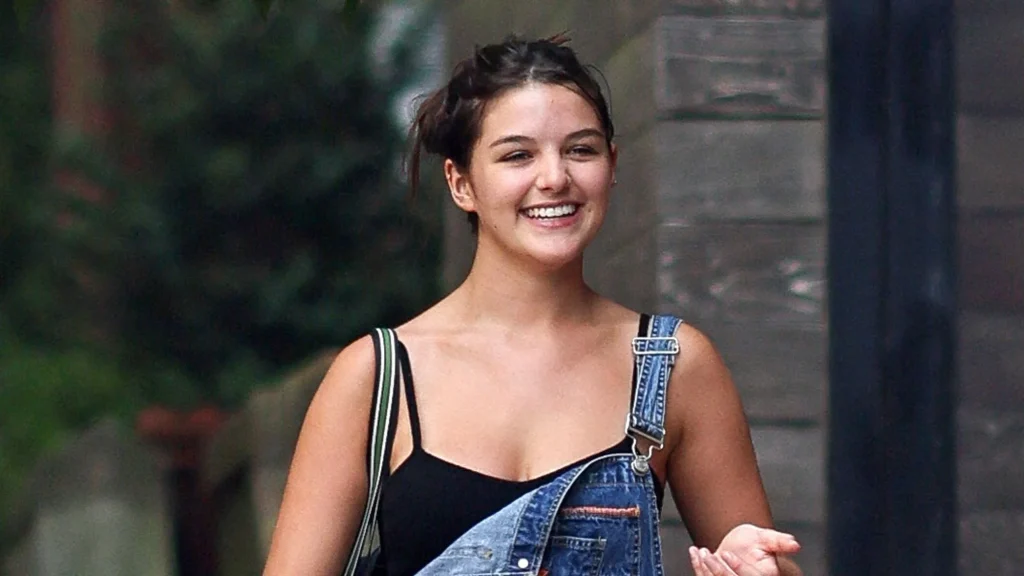
As she got older, that polished look loosened. Teen Suri appeared more often in denim, knitwear, sneakers, casual dresses, roomy jackets, and practical layers. The shift mirrored a broader change in youth fashion. Instead of looking “styled” from head to toe, the goal became a mix that felt collected over time: one vintage-looking layer, one comfortable basic, one slightly unexpected accessory. The result was less about matching and more about personality.
New York also became an obvious part of the aesthetic. Walking is built into daily life, so footwear has to work. Weather changes quickly, so layers matter. A coat may be oversized because it needs to fit over a sweater, and a tote bag may be more useful than a tiny statement purse. In that environment, style often becomes a negotiation between expression and practicality. Suri’s later looks fit naturally into that city rhythm.
By her late teens, bohemian references became more visible. Long patterned dresses, worn-in boots, corduroy, denim, simple tanks, loose trousers, and earthy colors appeared in combinations that felt closer to downtown student style than to Hollywood dressing. Vogue noted a mother-daughter outing in which Suri wore a tiered red-patterned maxi dress with Frye-style boots and layered outerwear, while Katie Holmes also leaned into a relaxed, slightly boho wardrobe. The resemblance was not about dressing identically. It was about sharing an approach: comfortable clothes, familiar textures, and pieces that get better when they look lived in.
That influence makes sense. Katie Holmes has spent years refining a style that can move between fashion-industry credibility and real-world wearability. She can pair a designer bag with a sweater that looks borrowed, or a tailored coat with jeans and sneakers. Suri appears to have absorbed the same idea that an outfit does not need to announce its price or provenance to look intentional.
Her transition into college life made the change even clearer. After graduating high school in 2024, Suri began studying at Carnegie Mellon University. Public reports in 2026 also noted that she legally adopted the surname Noelle, a name she had already used at her graduation. That personal change should not be reduced to a fashion narrative, but it does underline the larger theme of early adulthood: choosing how you want to present yourself, including what name you use and what visual identity feels like yours.
The most compelling part of Suri’s style evolution is its lack of obvious performance. There has been no highly publicized “new era,” no sudden luxury campaign, and no dramatic attempt to distance herself from her childhood image. Instead, the change has happened the way style usually develops off-camera: through repetition, experimentation, and a growing sense of what feels right.
Her wardrobe also reflects a generation that is less interested in rigid fashion categories. A romantic dress can be worn with sturdy boots. A tank top can sit under an oversized workwear jacket. Something preppy can coexist with something thrifted-looking. The point is not to commit to one aesthetic label but to make different influences feel coherent on the same person.

There is also a useful lesson in the way her clothes are discussed. Style transformation does not have to mean looking more glamorous, more expensive, or more conventionally “adult.” Sometimes transformation means becoming less curated. Comfort can be a sign of confidence. Repeating favorite pieces can be more distinctive than constantly debuting new ones. Wearing what works for your actual life is often more persuasive than following every trend.
Suri Noelle’s fashion story is still at an early stage, and it would be premature to define a permanent signature. At 20, personal style is supposed to move. What can already be seen, however, is a transition from childhood polish to an easy, urban mix of boho, preppy, and practical elements. The result feels less like a celebrity makeover and more like something familiar: a young woman discovering which clothes make her feel most like herself.
That gradualism may be the most useful fashion takeaway of all. Personal style rarely arrives as a finished identity; it develops by keeping what feels good and quietly dropping what does not. In Suri’s case, the repeated combination of practical shoes, relaxed layers, romantic dresses, and unfussy basics suggests a wardrobe being built through use rather than through a single stylist-imposed concept. If that continues, her future style will probably be interesting for the same reason it is now: it will look lived in before it looks labeled.